Items filtered by date: October 2025
Advantages of Seeing a Podiatrist
 Many people may take their foot health for granted, however it is extremely important to take care of your feet in order to prevent issues from arising. Not only can podiatrists help to prevent problems, their extensive knowledge on the feet allows for them to specialize and target their treatments in a more advanced manner as compared to a general practitioner. Podiatrists can help diagnose, treat, and rehabilitate foot related issues, including bunions, heel pain, bone fractures, fungal infections, and ingrown toenails. Podiatrists can also help patients find the proper orthotics to provide support for their feet. Additionally, they can help provide self-care and preventative tips, especially for patients with conditions like diabetes and rheumatoid arthritis. If you are experiencing any issues with the feet, or you want to get ahead of any potential issues, it is suggested that you make an appointment with a podiatrist.
If you are experiencing pain in the feet or ankles, don’t join the stubborn majority refusing treatment. Feel free to contact one of our podiatrists from Princeton Foot and Ankle Associates. Our doctors can provide the care you need to keep you pain-free and on your feet.
What Is a Podiatrist?
Someone would seek the care of a podiatrist if they have suffered a foot injury or have common foot ailments such as heal spurs, bunions, arch problems, deformities, ingrown toenails, corns, foot and ankle problems, etc.
Podiatric Treatment
A podiatrist will treat the problematic areas of the feet, ankle or lower leg by prescribing the following:
- Physical therapy
- Drugs
- Orthotic inserts or soles
- Surgery on lower extremity fractures
A common podiatric procedure a podiatrist will use is a scanner or force plate which will allow the podiatrist to know the designs of orthotics. Patients are then told to follow a series of tasks to complete the treatment. The computer will scan the foot a see which areas show weight distribution and pressure points. The podiatrist will read the analysis and then determine which treatment plans are available.
If you have any questions, please feel free to contact our offices located in Princeton, and West Windsor, NJ . We offer the newest diagnostic and treatment technologies for all your foot care needs.
Understanding Athlete’s Foot in Men

Tinea pedis, commonly known as athlete’s foot, is a frequent problem among men, especially those who wear tight shoes or spend long hours in socks. This fungal infection thrives in warm, moist environments and often begins between the toes, causing itching, burning, peeling skin, and an unpleasant odor. If left untreated, it can spread to the toenails or other parts of the body. Good hygiene, wearing breathable footwear, and regular sock changes can help prevent recurrence. Persistent infections may require prescription-strength treatment. Avoiding shared locker rooms or showers barefoot also helps stop reinfection. For men who notice ongoing irritation or cracked, itchy skin between the toes, it is suggested that you visit a podiatrist to ensure an accurate diagnosis, and fast relief from this stubborn and uncomfortable condition.
Athlete’s Foot
Athlete’s foot is often an uncomfortable condition to experience. Thankfully, podiatrists specialize in treating athlete’s foot and offer the best treatment options. If you have any questions about athlete’s foot, consult with one of our podiatrists from Princeton Foot and Ankle Associates. Our doctors will assess your condition and provide you with quality treatment.
What Is Athlete’s Foot?
Tinea pedis, more commonly known as athlete’s foot, is a non-serious and common fungal infection of the foot. Athlete’s foot is contagious and can be contracted by touching someone who has it or infected surfaces. The most common places contaminated by it are public showers, locker rooms, and swimming pools. Once contracted, it grows on feet that are left inside moist, dark, and warm shoes and socks.
Prevention
The most effective ways to prevent athlete’s foot include:
- Thoroughly washing and drying feet
- Avoid going barefoot in locker rooms and public showers
- Using shower shoes in public showers
- Wearing socks that allow the feet to breathe
- Changing socks and shoes frequently if you sweat a lot
Symptoms
Athlete’s foot initially occurs as a rash between the toes. However, if left undiagnosed, it can spread to the sides and bottom of the feet, toenails, and if touched by hand, the hands themselves. Symptoms include:
- Redness
- Burning
- Itching
- Scaly and peeling skin
Diagnosis and Treatment
Diagnosis is quick and easy. Skin samples will be taken and either viewed under a microscope or sent to a lab for testing. Sometimes, a podiatrist can diagnose it based on simply looking at it. Once confirmed, treatment options include oral and topical antifungal medications.
If you have any questions, please feel free to contact our offices located in Princeton, and West Windsor, NJ . We offer the newest diagnostic and treatment technologies for all your foot care needs.
Early Rheumatoid Arthritis Symptoms in the Feet

Rheumatoid arthritis, or RA, is an autoimmune condition that causes the body to attack its own joints, leading to inflammation and damage. Early symptoms in the feet often include pain, stiffness, and swelling, especially in the toes and midfoot. Causes are linked to immune system dysfunction, and risk factors include genetics, family history, and female gender. These early signs can make walking uncomfortable and may affect daily activities, if left untreated. A podiatrist can assess joint health, recommend supportive footwear or custom orthotics, and provide exercises to maintain mobility. If you have any of the above symptoms, it is suggested that you consult a podiatrist to detect whether it is from RA and to reduce discomfort while protecting long-term foot health and function.
Because RA affects more than just your joints, including the joints in your feet and ankles, it is important to seek early diagnosis from your podiatrist if you feel like the pain in your feet might be caused by RA. For more information, contact one of our podiatrists of Princeton Foot and Ankle Associates. Our doctors will assist you with all of your podiatric concerns.
What Is Rheumatoid Arthritis?
Rheumatoid Arthritis (RA) is an autoimmune disorder in which the body’s own immune system attacks the membranes surrounding the joints. Inflammation of the lining and eventually the destruction of the joint’s cartilage and bone occur, causing severe pain and immobility.
Rheumatoid Arthritis of the Feet
Although RA usually attacks multiple bones and joints throughout the entire body, almost 90 percent of cases result in pain in the foot or ankle area.
Symptoms
- Swelling and pain in the feet
- Stiffness in the feet
- Pain on the ball or sole of feet
- Joint shift and deformation
Diagnosis
Quick diagnosis of RA in the feet is important so that the podiatrist can treat the area effectively. Your doctor will ask you about your medical history, occupation, and lifestyle to determine the origin of the condition. Rheumatoid Factor tests help to determine if someone is affected by the disease.
If you have any questions, please feel free to contact our offices located in Princeton, and West Windsor, NJ . We offer the newest diagnostic and treatment technologies for all your foot care needs.
Reminder: When Was the Last Time...?

Custom orthotics, or shoe inserts, should be periodically replaced. Orthotics must fit properly to give you the best results. Protect your feet and ankles!
Are Flip-Flops Good for the Feet?
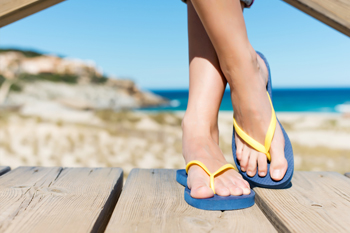 Many people enjoy wearing lighter clothes during the warm summer months, and that includes footwear. Flip-flops are easy to put on, and come in a variety of colors and styles. Research has indicated that it may be harmful to the feet when flip-flops are worn for the majority of the day. This can be due to a lack of an arch, and the toes typically grasp the front of the shoe to keep it on the foot. The style of walking may change to accommodate the type of flip-flop that is worn, and minimal protection may be offered for the feet. It may be beneficial to alternate supportive shoes with flip-flops, and a strap across the back of the shoe may help the shoe to stay on the foot. If you choose to wear flip-flops, and would like more information about what type of flip-flops to wear, please consult with a podiatrist.
Flip-flops can cause a lot of problems for your feet. If you have any concerns about your feet or ankles, contact one of our podiatrists from Princeton Foot and Ankle Associates. Our doctors will assist you with all of your foot and ankle needs.
Flip-Flops and Feet
Flip-flops have managed to become a summer essential for a lot of people. While the shoes may be stylish and easy to slip on and off, they can be dangerous to those who wear them too often. These shoes might protect you from fungal infections such as athlete’s foot, but they can also give you foot pain and sprained ankles if you trip while wearing them.
When Are They Okay to Wear?
Flip-flops should only be worn for very short periods of time. They can help protect your feet in places that are crawling with fungi, such as gym locker rooms. Athlete’s foot and plantar warts are two common fungi that flip-flops may help protect your feet against.
Why Are They Bad for My Feet?
These shoes do not offer any arch support, so they are not ideal for everyday use. They also do not provide shock absorption or heel cushioning which can be problematic for your feet. Additionally, you may suffer from glass cuts, puncture wounds, and stubbed toes since they offer little protection for your feet.
More Reasons Why They Are Bad for Your Feet
- They Slow You Down
- May Cause Blisters and Calluses
- Expose Your Feet to Bacteria
If you have any questions, please feel free to contact our offices located in Princeton, and West Windsor, NJ . We offer the newest diagnostic and treatment technologies for all your foot care needs.
